Mon-Sat: 8:00am-7:00pm
Tell us about your attic and request a free estimate if you need help choosing the right service.
Attic insulation is not a single product or one-size-fits-all project. Austin homeowners may encounter loose-fill fiberglass across the attic floor, fitted fiberglass batts between framing members, radiant barrier foil attached near the roof deck or older material that must be removed before other work can begin. Each option addresses a different condition.
The first useful question is not, “Which product is best?” It is, “What is happening in this attic?” Existing insulation depth, distribution, compression, contamination, framing, equipment access and roof exposure all affect the recommendation. A material that performs well in one attic may be awkward or unnecessary in another.
Central Texas roofs receive prolonged solar exposure during a long cooling season. Heat can move from the roof assembly into the attic and then toward the conditioned rooms below. Fiberglass slows conductive heat flow at the insulated boundary. Radiant barrier foil reduces radiant heat transfer from the roof deck into the attic. Insulation removal clears material that is no longer suitable to remain or that interferes with planned work.
This guide explains those differences so homeowners can ask better questions, understand an estimate and avoid paying for work that does not fit the attic.
The right service depends on the existing attic, the condition of its materials and the type of heat transfer or damage being addressed.
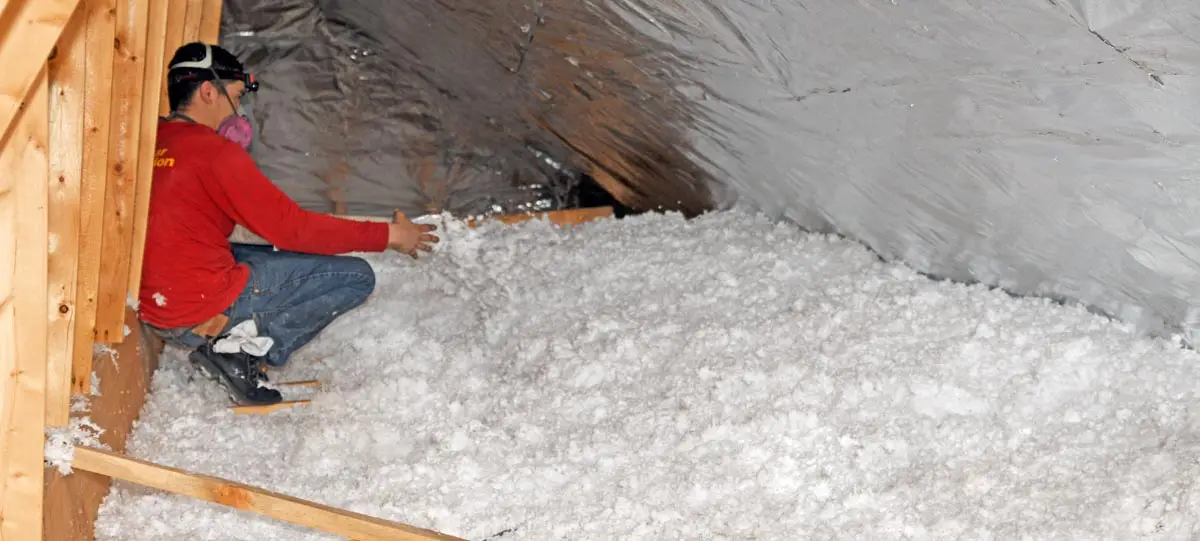
Blown-in fiberglass creates coverage across broad and irregular attic floors. Fiberglass batts are fitted into defined accessible cavities. Both slow conductive heat flow, but they require different installation conditions.
Radiant barrier foil is installed along suitable roof framing to reduce radiant energy moving from the hot roof deck into the attic. It complements rather than replaces attic-floor insulation.
Removal may be appropriate for contaminated, damaged or heavily disturbed insulation, or when other attic work requires a clear surface. Age alone does not automatically justify removal.
Blown-in fiberglass and fiberglass batts use similar insulating material in different forms. Neither method is automatically superior. Installation quality and suitability for the available space matter more than choosing a familiar name.
Blown-in fiberglass is distributed through a hose across the attic floor. The loose material can flow around framing, wiring and common obstructions, making it useful for broad, irregular areas. Installers must establish an appropriate, even depth while preserving necessary ventilation and equipment access. Loose-fill material can later be displaced by attic traffic or service work, so visible paths and thin spots deserve attention during an evaluation.
Fiberglass batts come in preformed sections. They work best in open, defined cavities where the installer can measure, cut and fit each piece around wiring, plumbing and framing. Batts that are folded, compressed or forced around obstructions can leave gaps. A neat appearance does not guarantee a proper fit underneath.
Some attics can use both methods in different areas. A homeowner may also have existing batts beneath loose-fill material from a previous upgrade. Before adding anything, the contractor should review the condition of the existing layers and make sure the proposed work will not hide damage, contamination or access problems.
For a closer comparison of the fitted option, visit our fiberglass batt insulation page.
Fiberglass, radiant barrier foil and removal are not interchangeable. Each belongs at a different point in the attic-improvement decision.
Fiberglass insulation is installed at the thermal boundary—commonly the attic floor—to slow heat moving between the attic and conditioned rooms.
Radiant barrier foil is positioned near suitable roof framing to reduce radiant energy entering the attic from the sun-heated roof assembly.
Removal clears unsuitable material before replacement or other attic work. Serviceable insulation can often remain when its condition and the project allow it.
Visible low areas, inconsistent coverage, compressed paths and material displaced around service equipment can justify closer evaluation. Comfort or energy concerns alone do not prove that insulation is the only cause, because ductwork, air leakage, equipment performance and solar exposure also matter.
Sometimes. Existing material should first be checked for contamination, moisture damage, heavy debris, compression and compatibility with the planned work. Adding material over a problem can make future correction more difficult.
No. Age by itself is not enough. Removal makes sense when material is damaged, contaminated, heavily disturbed or must be cleared for another project. Serviceable material may remain in place.
No. Radiant barrier and fiberglass address different forms of heat transfer in different parts of the attic. Radiant barrier reduces radiant heat coming from the roof assembly; fiberglass slows conductive heat flow at the insulated boundary.
Radiant barrier performance depends on proper orientation toward an air space and a suitable installation method. We evaluate accessible roof framing and attic configuration before recommending foil.
Blown-in fiberglass often works well around irregular framing and common obstructions. Batts can perform well when cavities are clearly defined and fully accessible for accurate fitting. The layout determines the better method.
No responsible contractor can guarantee a precise savings amount. Insulation can reduce unwanted heat flow when coverage is inadequate, but energy consumption also depends on HVAC efficiency, ducts, air leakage, thermostat settings, weather and household use.
A useful estimate should identify the service, material, preparation, approximate included areas and whether removal is part of the scope. It should also explain when another trade should address a roof leak, pest problem, electrical concern or HVAC issue first.
No. Attics can contain weak walking surfaces, exposed wiring, extreme heat and contaminated material. Note visible concerns from a safe access point, but do not enter an unsafe space just to take measurements or photographs.
Select the service that interests you and describe what you have noticed. We will discuss the attic concern, confirm the property location and explain the appropriate next step.