Mon-Sat: 8:00am-7:00pm

Tell us about your Georgetown home and the attic service you want evaluated.
Georgetown is really three housing markets wearing one city name, and they sit in three different ZIP codes. The 78626 side holds the historic core — genuinely old housing, including homes built before 1940. The 78628 side west of I-35 carries a distinct 1960s and 1970s cohort. And 78633 to the northwest is dominated by Sun City, where there is almost no housing predating 1980 at all.
An attic recommendation that works in one of those three is often wrong in the other two. Georgetown also sits on the northeastern edge of the Hill Country with the Balcones Escarpment running through it, and it has been the fastest-growing city in the country in its size class — which means new construction and fifty-year-old construction are frequently a few minutes apart.
Choose the service to learn more, or request an attic evaluation if you are unsure which option fits your home.
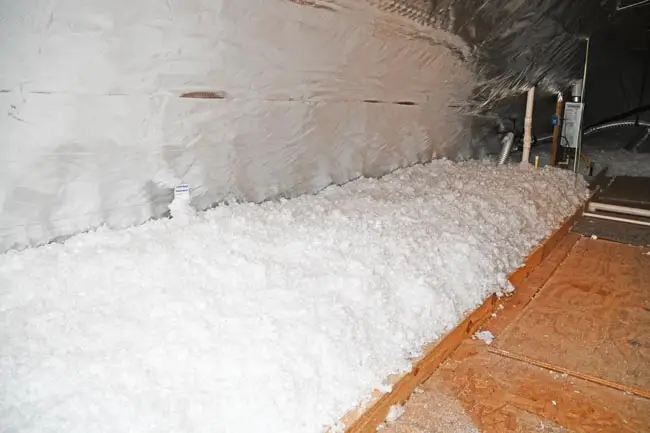
Blown-in fiberglass can improve coverage across open attic floors, while fiberglass batts can be fitted in accessible framing areas where their shape and placement make sense. We evaluate existing depth, gaps, compression and obstructions before recommending either approach.
Radiant barrier foil is installed along suitable roof framing to reduce radiant heat transfer from the roof deck into the attic. It can complement—not replace—proper attic-floor insulation when the attic configuration supports a professional installation.
Removal may be appropriate when insulation is contaminated, badly damaged, heavily disturbed or blocking access needed for other attic work. We define the removal scope clearly and discuss replacement insulation separately so homeowners understand the complete project.
Serenada and the pre-code west side. Serenada was developed from the mid-1970s into the mid-1980s — predominantly single-story ranch homes on lots running from a third of an acre up to an acre and a half, shaded by tall oaks and pecans. Many of these homes are still in largely original condition, and that includes the attic. Texas had no mandatory statewide residential energy code before September 1, 2001, so whatever went in during construction was the builder’s choice, and fifty years of settling has since reduced it further. Single-story plans also put the whole living area directly under the attic, so shortfalls are felt rather than theorized.
Sun City. Del Webb broke ground in May 1995 and the first residents moved in during the spring of 1996; roughly 8,500 homes went up in the community’s first twenty-five years. The oldest Sun City homes are now approaching thirty years old and were built under no mandatory code, while later phases were built under code editions that asked for less than today’s R-38 ceiling requirement, which has only applied since September 1, 2016. Sun City also has an unusually high share of long-tenure owners who have been in the same house since it was new — which often means the attic has never been looked at since handover.
The newer communities. Georgetown Village built out from 1999 to 2018, Berry Creek through the 1990s and 2000s with sections still starting, Rancho Sienna from 2015, and Wolf Ranch continues toward roughly 2,600 homes across 1,120 acres. Wolf Ranch is worth a specific note because it offers both composition and metal roofing, and those two roof assemblies behave differently in an attic — worth knowing before anyone recommends radiant barrier.
Hail is a real factor here, and it is the single most overlooked reason Georgetown attics underperform. A late-May 2020 storm dropped hail ranging from ping-pong to baseball size along a path of nearly three miles, running from Sun City down Williams Drive toward I-35, with residents reporting shingle pieces coming down with the hail. Georgetown was hit again in April 2025. If your roof has been repaired or replaced since either event, look at what happened underneath. Roofers work from the top down, but decking repair drops debris, displaces batts and opens gaps at the eaves, and nobody’s roofing contract includes putting the insulation back. This is genuinely common and almost nobody checks.
Check it yourself in two minutes. Open the attic hatch and shine a light across the floor. If you can see the tops of the ceiling joists, or the insulation sits level with them, you are well short of R-38 — that generally takes twelve to sixteen inches of settled blown fiberglass, which sits clearly above the framing. If you have had roof work done, look specifically for displaced material, gaps at the eaves and loose decking debris sitting on top of the insulation.
We keep the process practical: evaluate visible attic conditions, explain suitable options and complete the approved scope with care.

We review visible insulation depth, coverage, condition, access and the areas affected by past service work.
You receive a clear explanation of suitable materials, preparation needs and why a particular option fits the attic.
Our crew protects the access path, completes the agreed installation or removal scope and reviews the finished work.
Yes — 78626, 78628 and 78633, including Old Town, Serenada, Berry Creek, Georgetown Village, Sun City, Wolf Ranch, Rancho Sienna, Cimarron Hills and the Georgetown side of Teravista. Include the address when you request an estimate.
Yes, and this is the most overlooked thing in Georgetown. The city took a significant hailstorm in late May 2020 along Williams Drive from Sun City toward I-35, and another in April 2025. Roof replacement means people and material moving through the attic, and decking repair displaces insulation, opens gaps at the eaves and drops debris on top of what is left. No roofing contract includes restoring the insulation. We can evaluate what the roofing work left behind once the roof itself is finished.
Open the hatch and shine a light across the attic floor. If the tops of the ceiling joists are visible, or the insulation is level with them, you are well below R-38 — which generally takes twelve to sixteen inches of settled blown fiberglass. If you have had roof work since 2020, look specifically for displaced batts, gaps at the eaves and decking debris sitting on the insulation.
We will not put a figure on a page, because it depends on what we find: attic floor square footage, access, whether existing material has to come out first, which service you choose, and how much work is needed at the eaves and around obstructions. Attic size and removal are the two biggest drivers. A single-story Serenada ranch and a large Wolf Ranch two-story are very different jobs. The evaluation and written estimate are free, and the scope is in writing before anyone starts.
For a lot of Sun City homeowners, no. The community started in 1995 and many original owners are still in the same house, which means the attic has often not been examined since the builder handed it over. The oldest phases predate any Texas energy requirement, and even later phases predate the R-38 ceiling standard in force since September 2016.
It is worth measuring. Serenada was built from the mid-1970s into the mid-1980s, before Texas required anything, and loose-fill settles substantially over that span. Because these are predominantly single-story homes, the entire living area sits directly under the attic, so any shortfall affects the whole house rather than just an upstairs.
Sometimes, but it depends on the assembly rather than the roof material alone. Radiant barrier works by reducing radiant heat transfer from the roof deck into the attic, and how much benefit that offers depends on the framing, existing decking, ventilation and what insulation is already at the attic floor. We look before recommending it, and we will tell you if it is not the right spend on your house.
Tell us which service interests you and what you have noticed in the attic or living space. We will confirm service availability in Georgetown and discuss the next step.