Mon-Sat: 8:00am-7:00pm

Homeowners often assume old attic insulation has to come out before anything new goes in. In most Austin homes, it does not. Clean, dry, compatible insulation can stay right where it is and keep contributing thermal resistance while new fiberglass corrects inadequate depth or uneven coverage.
Removal is the right call when the existing material creates a health, moisture, access or installation problem. That decision should follow an inspection — not a rule based on age, and not a default line item on a quote. Removal costs you labor and disposal, so there should be a specific reason for it.
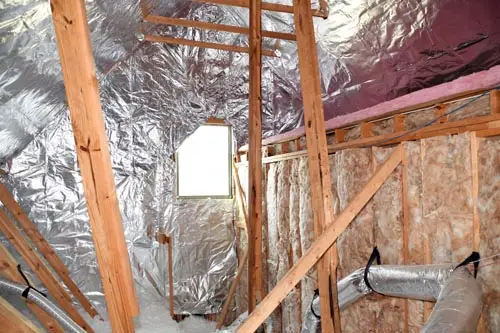
Existing insulation can stay when it is dry, reasonably clean, free of significant animal waste, compatible with the planned assembly, and not blocking repairs or safety work. Minor dust staining on its own does not mean the material has failed.
ENERGY STAR is direct about this: old insulation generally does not need removing unless it is wet, moldy, smelly, or contains animal waste. Its attic insulation guidance also recommends sealing air leaks before adding anything on top.
When the attic is otherwise ready, loose-fill fiberglass can go over existing unfaced batts, and unfaced batts can sometimes go over loose fill. Whatever the method, it has to preserve ventilation paths and required safety clearances.
Wet insulation points to a roof leak, plumbing failure, condensation, or an exhaust vent terminating in the attic instead of outside. Find and repair the source first. Covering damp material conceals staining and makes any future inspection harder. Condition, how long it was wet, odor, microbial growth and damage to surrounding wood or drywall all shape the recommendation, and a roofing or moisture professional may need to be involved before insulation work resumes.
Rodents, birds and raccoons tunnel through insulation, leave waste, introduce odor and damage ducts and wiring. Entry points have to be closed before removal and replacement, or the new insulation gets contaminated too. Heavily affected material is not a suitable base for a clean installation — professional attic insulation removal provides the access needed for cleanup and evaluation.
Construction debris, roofing fragments, stored items and mixed insulation make an attic hard to inspect or prepare. Some older attics contain vermiculite, which may be associated with asbestos. ENERGY STAR recommends vermiculite not be disturbed until it has been tested by an approved laboratory. If the existing material cannot be confidently identified, stop — do not rake, vacuum or move it. Testing and the right specialist come first, and any contractor who starts pulling unidentified material out of your attic is doing you a disservice.
Air sealing, electrical correction, ceiling repair, pest exclusion or structural work may all require clear access to framing and penetrations. Selective or full removal makes that work possible and lets the attic floor be inspected before it gets covered again.

Fiberglass has no universal expiration date. Performance depends on installed thickness, continuity, compression, moisture, contamination and disturbance — not the year it went in.
Older fiberglass that stayed clean, dry and evenly installed can still be doing useful work. Newer insulation performs badly if it went in with gaps, got compressed under storage, or was pushed away from the eaves during a service call. We have seen both in the same week.
Whether the old material stays or goes, the preparation determines the quality of the finished job:
The EPA recommends air sealing before adding attic insulation for a practical reason: the leaks are far easier to reach before they are buried under a foot of fiberglass. Safety-sensitive locations like combustion flues and electrical equipment need the correct materials and clearances, not just care.
Blown-in fiberglass suits broad attic floors and irregular spaces. It fills around framing and existing material and can be installed to an even settled depth, with depth markers documenting the final coverage. The crew should never bury unsafe fixtures, block vents or damage ducts — and new material should never be used to hide wet or contaminated insulation underneath.
Fiberglass batts work best when they fit the framing cavities without gaps, folds or compression. A second layer can be laid perpendicular to the attic floor joists in suitable applications, normally unfaced so no unintended vapor retarder is created.
Batts are not automatically better because they look tidier. Complex framing and obstructions often make loose fill the more practical choice. The attic geometry and access should decide the method.
On radiant barrier: radiant barrier foil is installed at the roofline facing an air space. It does not correct contaminated attic-floor insulation and should never conceal leaks or damaged framing. It addresses a different heat-transfer mechanism entirely and may well be part of the final plan — but attic defects get corrected first.
Ask these of us, and ask them of anyone else who quotes you:
A contractor who can answer all seven without hesitating has looked at your attic. One who cannot is quoting from a template.
Usually yes, as long as the old material is dry, clean, compatible and not hiding a condition that needs correcting. Facings and vapor-control details get reviewed before anything goes on top.
Not automatically, and we would push back on anyone who says otherwise. Repair the leak, then evaluate the affected area. How wet it got, for how long, whether contamination followed, and the condition of surrounding materials all decide whether selective or broader removal makes sense.
Often not — material can frequently be moved aside and replaced. Larger projects, or leak locations buried under deep loose fill, can make selective removal more practical. The scope should match the access actually needed, nothing more.
Not by itself. If it is dry, clean and evenly distributed, thirty-year-old fiberglass is still working. What we check is depth, coverage and condition — and in a lot of older Austin attics the real finding is that there was never enough of it to begin with, not that it wore out.
Vermiculite looks like small, lightweight, pebble-like accordion-shaped granules rather than fluffy fiberglass. If you think you might have it, do not disturb it and do not let anyone else disturb it either. It needs laboratory testing first, and if it tests positive it needs an abatement specialist, not an insulation contractor.
No. The attic evaluation and written estimate are free, and if the honest answer is that your existing insulation should stay put, that is what we will tell you.
We inspect the accessible attic and tell you plainly whether the existing material can stay, needs topping up, or genuinely should be removed — and we will not quote a tear-out we cannot justify. The evaluation and written estimate are free. Serving Austin, Round Rock, Cedar Park, Georgetown, Leander, Pflugerville, Kyle, Buda, Hutto, Manor and Lakeway.