Mon-Sat: 8:00am-7:00pm

An upstairs room that stays hot while the first floor feels fine is one of the most common complaints we hear in Central Texas. The attic is usually part of the explanation. It is rarely the whole one.
Roof exposure, insulation coverage, air leakage, ductwork, HVAC balance, windows and even thermostat placement all affect how the second floor feels. The useful approach is to diagnose the whole system before buying a product — adding insulation helps when coverage is thin or uneven, but it will not reconnect a separated duct or fix a badly balanced air-delivery system, and we will tell you when that is what we find.
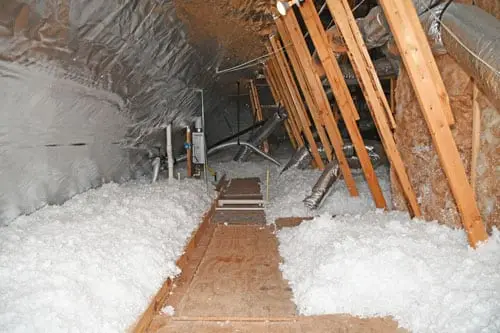
Upper rooms sit directly beneath the roof and attic, where summer solar heat is most intense. Heat moves from warmer areas toward cooler ones, and air movement through gaps carries heat and moisture along with it. At the same time, the second floor often receives less conditioned air than it needs, or struggles to return warm air to the system.
So a room can feel hot for several overlapping reasons at once. The ceiling gains heat from the attic, hot outdoor air leaks in through building gaps, and the supply register never delivers enough cool air to offset the load. Fixing one of three does not always fix the room, which is why we look at all of them.
Attic-floor insulation should form a continuous thermal layer above the conditioned rooms. Low spots, bare areas, compressed batts and insulation shoved aside during electrical or HVAC work all create easy paths for heat. ENERGY STAR lists hot ceilings and uneven temperatures between rooms among the clearest reasons to evaluate an attic insulation project. A real inspection looks past average depth and checks the perimeter, the attic hatch and anywhere mechanical work has happened.
If the existing material is dry and serviceable, additional blown-in fiberglass can restore broad coverage. Fiberglass batts suit accessible framing bays when each piece can be cut and fitted without gaps or compression.
Insulation slows heat flow. It does not stop air moving through holes. Common attic-floor leak points are plumbing and wiring penetrations, top plates, dropped soffits, the attic access opening and gaps around fixtures. In summer, pressure differences and duct operation actively pull hot attic air toward your living space. Air sealing and insulation work as a pair, not as alternatives.
Sun heats the roofing and decking, and the hot underside radiates energy down toward everything cooler in the attic — including your ducts and your ceiling. A properly installed radiant barrier foil system faces an air space and cuts that radiant transfer. It does not replace attic-floor insulation, fix a roof leak or seal air gaps. In many Austin attics, foil and fiberglass together address two different pathways.

We would rather tell you the problem is not ours to solve than sell you insulation that will not fix it.
Ducts commonly run through vented attics in Austin-area homes. A separated connection, torn duct jacket, crushed flex duct or poor sealing all reduce the cool air reaching an upstairs room, and leakage on the return side actively pulls hot attic air into the system. If one room is dramatically hotter than the rooms beside it, the duct serving that room deserves attention first. A qualified HVAC professional can test airflow and duct leakage.
Cool air has to enter a room, circulate, and get back to the system. Closed registers, obstructed returns, restrictive filters, closed bedroom doors with no return pathway, or an imbalanced system will leave warm air sitting upstairs no matter how good your attic is. Before assuming the attic is at fault, check that registers are open, furniture is not blocking airflow, and filters are current.
West- and south-facing windows add a serious afternoon load, especially with large glass areas or no shading. This is often why one upstairs bedroom is uncomfortable while the one next door is fine. Attic work reduces ceiling heat gain; it cannot do anything about sun coming through the glass.
A single downstairs thermostat responds to the temperature around itself. Once the first floor hits the set point the system stops, even though upstairs is still warm. Zoning, balancing, equipment sizing and thermostat strategy are HVAC questions, and they should be evaluated separately from insulation.
The point of that list is to separate insulation problems from roofing, electrical, moisture and HVAC problems, so the right trade fixes the right thing. On old material specifically: age alone is rarely a reason for removal. ENERGY STAR notes existing material can usually stay unless it is wet, moldy, smelly or contaminated by animal waste. When it genuinely is, professional attic insulation removal is the right first step.
No. It reduces heat flow when the existing thermal layer is inadequate, which is often the case — but duct defects, poor airflow, window gain and HVAC balance may still need correcting. If insulation is not your main problem, we will say so.
A single-room problem usually points to something local: a gap in coverage right above that room, a duct or register issue, heavy window exposure, or no return airflow. One room is diagnostic information, not a reason to insulate the whole attic.
No. Radiant barrier reduces radiant heat transfer across an air space; fiberglass resists conductive heat flow through the ceiling. Different jobs, and neither substitutes for the other.
Open the attic hatch and shine a light across the floor. If you can see the tops of the ceiling joists, or the insulation sits level with them, you are well short of current standards and the ceiling is a likely contributor. If it is well above the framing and even, look harder at ducts and airflow.
Not honestly. Too many causes overlap. We would rather come out, get in the attic and look — the evaluation and written estimate are free, and we will point you toward an HVAC contractor instead if that is what your house actually needs.
We get into the attic, measure what is actually there, check the ductwork and tell you which cause is driving it — even when the answer is that you need an HVAC contractor rather than us. The evaluation and written estimate are free. Serving Austin, Round Rock, Cedar Park, Georgetown, Leander, Pflugerville, Kyle, Buda, Hutto, Manor and Lakeway.