Mon-Sat: 8:00am-7:00pm

Attic insulation and air sealing solve related but genuinely different problems. Fiberglass slows heat moving through the ceiling assembly. Air sealing limits uncontrolled air moving through cracks, holes and chases. When attic-floor leaks stay open, a deep layer of insulation will not perform the way you were told it would.
This is the single most common reason a homeowner adds insulation, spends real money, and does not feel the difference they expected. The insulation was not the problem — or not the whole problem.
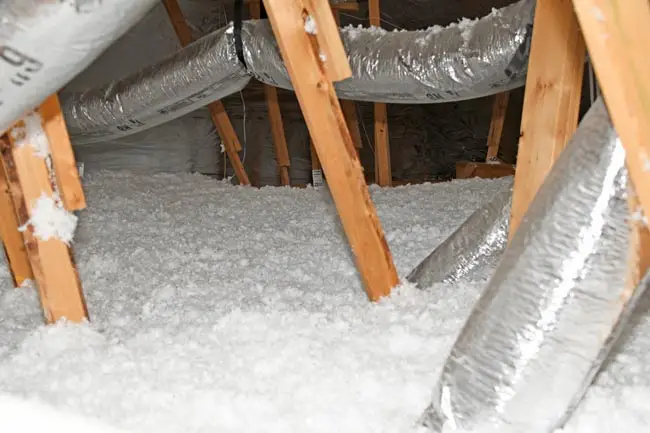
Fiberglass works by trapping air within fine glass fibers, which slows conductive heat flow. It was never designed to stop air rushing through a plumbing hole, an open wall cavity or a poorly sealed attic hatch — and it does not.
Moving air carries heat, moisture, dust and odors along with it. In summer, hot attic air gets pulled toward the house through those leaks. In cooler weather, warm indoor air escapes upward and carries moisture into the attic. Wind, temperature differences, exhaust fans and duct leakage all influence which direction it moves and how much.
ENERGY STAR recommends completing attic air sealing before adding insulation, for a very practical reason we will come back to.
Most are not dramatic holes. A house typically has dozens of smaller paths that add up:
Different openings need different materials and different safety details. Ordinary spray foam does not belong against a hot flue. ENERGY STAR specifies metal flashing and high-temperature sealant for flue and chimney gaps, and recommends professional help wherever safety conditions are uncertain. This is worth knowing before anyone with a can of foam goes up there.
This is one of the more useful things we look for. Darkened fiberglass around an opening means the material has been filtering dust out of moving air — which tells us exactly where air has been travelling, even when the opening itself is not obvious.
Dirt alone does not mean the insulation has to go. ENERGY STAR notes that stained insulation can usually be moved aside, the leak sealed, and the material put back if it is otherwise serviceable. Water staining, active dampness, strong odor or animal waste is a different matter, and needs investigating before anything is moved or covered.
Air leakage also explains complaints that insulation alone never solves: drafty rooms, hot ceilings, uneven temperatures, and a thermostat setting the house never quite reaches. Upstairs rooms feel it worst because they sit directly beneath the attic. If the insulation also has gaps or low spots, that ceiling is losing on both fronts at once — heat through the material and air through the openings.
Which is why “the upstairs stays hot” should always lead to an inspection rather than an automatic recommendation for more inches.

The reason is simple and physical: once new loose-fill insulation is down, every attic-floor penetration is buried under a foot of fiberglass. Sealing first lets the crew work directly at the building surface, then restore a continuous insulation layer over the top of finished work.
The sensible order:
Follow that sequence and nothing gets concealed that should have been finished first. Skip it and you pay twice.
After preparation, blown-in fiberglass creates even coverage across broad areas and around irregular framing, and is particularly useful where existing loose fill just needs more depth. Depth is not the only quality measure though — the finished layer has to be consistent, soffit vents must stay open, the attic access needs addressing, and clearances around equipment have to be maintained.
Fiberglass batts perform well when they closely fit the framing cavities. Gaps, folds, compression and short cuts all break the continuity. What batts should never be relied on for is plugging air leaks underneath them — that is not what they do.
Sealing the ceiling plane does not mean closing the attic’s roof ventilation. Soffit, ridge and other passive vents serve an entirely different purpose from leaks between the house and the attic. ENERGY STAR specifically cautions against covering soffit vents with insulation — rafter vents or baffles keep a channel open at the eaves while letting insulation extend fully over the attic floor. Getting this wrong causes moisture problems that are far more expensive than the insulation was.
Where radiant barrier fits: air sealing controls air movement, fiberglass resists conductive heat flow, and radiant barrier foil reduces radiant heat transfer across an air space. Three distinct functions. A radiant barrier can cut roof-generated radiant heat considerably in an Austin attic, but it will not close a single attic-floor penetration and it does not replace insulation. Any proposal worth signing identifies which of the three pathways it is actually addressing.
Conditions that need special handling: combustion flues, chimneys, non-IC recessed lights, knob-and-tube wiring, vermiculite, mold and active moisture are not ordinary cracks. If fuel-burning equipment sits in the attic, ENERGY STAR recommends combustion-safety testing by a qualified HVAC professional after air sealing. Do not let a general insulation proposal gloss over any of that.
No. Fiberglass slows conductive heat flow; it is not a substitute for a durable air seal at the building surface. Air passes straight through it. This is the single most misunderstood thing about attic insulation.
Open air leaks are the most common explanation. If hot attic air is still moving freely into the ceiling plane through penetrations, more depth on top of those openings does not address what is actually happening. Duct leakage in the attic is the other usual culprit.
Not usually. Serviceable material can often be moved aside and put back. Insulation removal makes sense when contamination, moisture, extensive debris or genuine access requirements justify it — not as a default.
No, and this matters. Intended roof ventilation stays open. The target is uncontrolled leakage between the conditioned house and the attic, not properly designed soffit or ridge vents. Sealing those creates moisture problems.
Darkened or dirty-looking fiberglass around penetrations is the clearest visual clue — the insulation has been filtering dust out of moving air. Drafts near ceiling fixtures, rooms that never hold temperature, and dust accumulating faster than it should are all worth mentioning when you call.
We evaluate accessible attic-floor leak locations as part of the inspection and tell you what we find, including anything that needs an electrician, roofer or HVAC contractor rather than us. The evaluation and written estimate are free.
Air leakage is usually the reason. We inspect the accessible attic, look for the leak paths the dust patterns give away, and tell you what is actually costing you comfort — including the parts that belong to another trade. The evaluation and written estimate are free. Serving Austin, Round Rock, Cedar Park, Georgetown, Leander, Pflugerville, Kyle, Buda, Hutto, Manor and Lakeway.