
Radiant Barrier Foil Installation in Austin: What a Proper Job Looks Like

Where the Foil Goes, How It Is Fastened, and the Shortcuts That Quietly Waste It

Radiant barrier foil only does its job when it goes in the right place, faces the right direction, and stays clean. The material itself is simple: aluminum foil bonded to a reinforced backing. Where and how it is fastened decides whether your attic actually runs cooler next August or just looks shinier.

If you are comparing quotes for radiant barrier foil installation in Austin, read this first. It walks through what a proper install looks like inside a Central Texas attic, the shortcuts that quietly cut performance, and the questions that separate a careful installer from a fast one.

Your roof is the biggest heat source your home faces all summer. Getting this part right is worth a few minutes of your time.
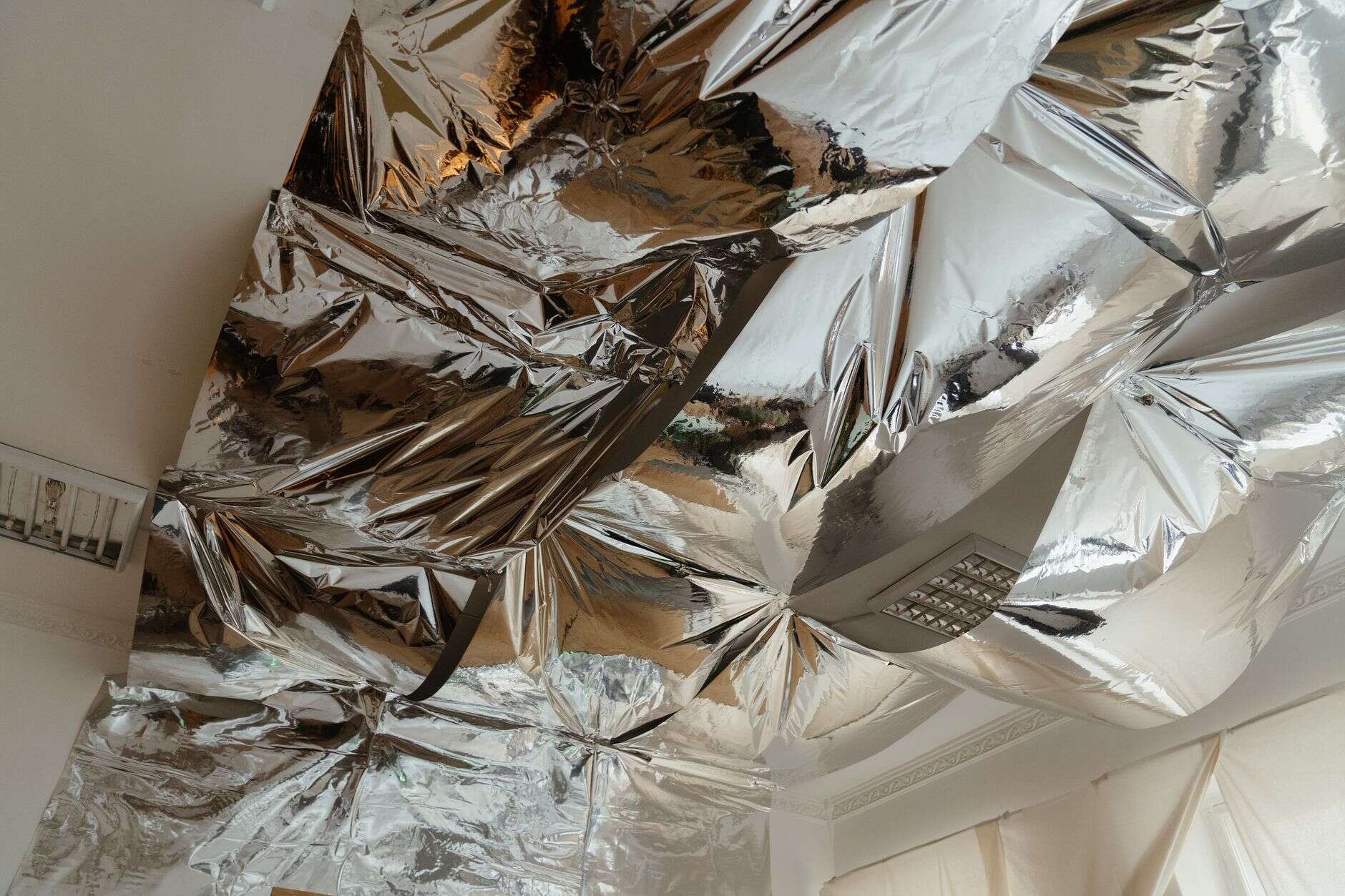
Reflective radiant barrier foil for Austin attics

Why Installation Decides Whether Foil Earns Its Keep

On a summer afternoon, your roof deck gets hot enough that its underside radiates heat down into the attic like a stovetop element. That radiant energy lands on your ceiling insulation, your ductwork, and anything stored up there. Foil interrupts that path. Aluminum has very low emittance, so it gives off very little of the heat it absorbs and reflects most of the infrared energy that strikes it.

The industry standard for sheet radiant barriers, ASTM C1313, calls for an emittance of 0.1 or less. Good foil meets that easily straight off the roll. What it cannot do is overcome bad placement. A radiant barrier pressed against another surface, buried under dust, or blocking airflow loses most of the advantage you paid for. That is why the rest of this guide is about installation, not product brochures.

One thing to keep straight from the start: a radiant barrier is not insulation and carries no R-value. The EPA and the FTC are both clear on that. It works alongside the insulation on your attic floor rather than replacing it. For the side-by-side comparison, see our breakdown of radiant barrier vs. attic insulation.

Roof Rafters vs. the Attic Floor

There are two common ways to put foil into an existing attic: stapled to the underside of the roof rafters, or laid flat across the attic floor on top of the insulation. Floor installs are faster and cheaper, which is why some outfits default to them. They also age badly in the dusty conditions of a typical Austin attic.

Foil works through its surface. Once dust settles on a horizontal sheet, that surface stops behaving like bare aluminum, and research on horizontal applications has found they can lose roughly half their effectiveness over time as dust builds up. A sheet stapled to the rafters faces down toward the attic, so dust has nowhere to land on the working side. It keeps performing year after year.

Floor-laid foil causes a second problem: it covers your insulation. Anyone who later needs to run wiring, service a bath fan, or check insulation depth has to pull it back, and it rarely goes back down neatly. Rafter installation keeps your attic floor open and serviceable.

That is why our crews install radiant barrier foil along the accessible roof framing. It is the method that keeps working long after the first summer.

The Air Space Rule

Foil needs an air space on its reflective side to work as a radiant barrier. If the shiny face is jammed tight against another solid material, heat simply conducts through the contact point and the low-emittance surface has nothing to do.

When foil is stapled to the bottom edge of the rafters, you get exactly the geometry it needs: an air channel between the foil and the roof deck above, and the open attic below. Air in that channel rises toward the ridge as it heats, which helps carry some of that heat out through your roof vents instead of down toward your ceiling.

Watch for installs where the foil is pulled drum-tight against the decking between rafters, or wrapped snugly around ductwork. Both look tidy. Neither works the way the product is designed to.

Perforated Foil and Attic Moisture

Most radiant barrier sold for attic retrofits is perforated, punched with tiny holes so water vapor can pass through. That matters in Central Texas, where humid Gulf air moves through attics for much of the year. A solid, impermeable sheet stapled under the roof could hold moisture against your decking. Perforated foil lets vapor pass while still reflecting radiant heat.

Ask any installer what product they use and whether it is perforated. It is a simple question, and the answer tells you whether they have thought about your roof deck or only about the price per square foot.

Radiant barrier foil installation between roof rafters in an Austin attic

Ventilation Has to Stay Open

Your attic breathes in at the soffits and out near the ridge, through ridge vents, turbines, or gable vents. A radiant barrier install should never choke either end of that loop. Foil stapled all the way down to the top plate can block soffit intake. Foil run tight to the peak can cut off the exhaust path.

A careful install stops the foil short at the eaves so intake air can rise behind it, and leaves a gap below the ridge so warm air can escape. If your attic already has ventilation problems, like missing soffit vents, baffles crushed under insulation, or a bath fan venting into the attic, those should be flagged during the evaluation. Foil works best in an attic that moves air the way it should.

Gable Walls, Attic Access, and the Spots Shortcuts Skip

The roof slopes get most of the attention, but west-facing gable walls take a pounding from the afternoon sun too. Covering the gables along with the rafters closes a heat path that partial installs leave wide open.

The other places to check are the ones that take extra time: tight corners near the eaves, the area around your attic access, spaces behind HVAC equipment, and transitions where roof planes meet. Gaps there are common on rushed jobs. Overlapping seams, consistent stapling, and continuous coverage across every reachable section are what you are paying for.

Just as important is what the foil stays away from. Gas flues, water heater vents, and other heat sources need their required clearances respected, and wiring and junction boxes must stay accessible. Coverage matters, but never at the expense of safety.

What Installation Day Looks Like

For most Austin homes the work is finished in a couple of hours, and you do not have to leave the house or clear out the rooms below. Here is the usual sequence:

  • Evaluation. The crew checks your roof framing, existing insulation, ventilation, and attic access, and points out anything that should be fixed first.
  • Protection. The path to the attic hatch is covered so your floors and furniture stay clean.
  • Installation. Perforated foil is stapled to the underside of the rafters in overlapping courses, reflective side facing the attic, with gaps left at the eaves and ridge for airflow.
  • Gables and detail areas. Gable walls and the hard-to-reach sections get covered, while flues and electrical stay clear.
  • Final check. Coverage is checked across every reachable section, and you get a plain-English rundown of what was done.

Because the foil goes on the roof framing, it can usually be added without disturbing serviceable insulation on the attic floor. If your insulation is thin, pairing foil with blown-in fiberglass insulation or fiberglass batts in the same visit is often the most efficient way to handle the whole attic.

Foil vs. Spray-On Radiant Barrier Coatings

You may be offered a radiant barrier paint or spray coating as a cheaper alternative. Coatings can lower the emittance of your roof decking, but they generally do not reach the very low emittance of bare aluminum foil, and their results depend heavily on how evenly they go on. Like floor-laid foil, they also lose reflectivity as dust settles. For a long-term result in a Texas attic, quality foil installed at the rafters is the more dependable choice.

What Can You Expect on Your Electric Bill?

Honest answer: it depends on your house. Department of Energy research through its Building America program found radiant barriers can cut cooling costs by roughly 8 to 12 percent in hot climates. Homes with ductwork in the attic tend to see the biggest difference, because those ducts sit right in the heat the foil is blocking. Roof color, shade, insulation levels, and how your system is set up all move the number.

For the full research picture, including what Oak Ridge National Laboratory measured in hot-climate field studies, see does radiant barrier really work?

Six Questions to Ask Any Radiant Barrier Installer

Whether you call us or anyone else, these questions will tell you a lot:

  1. Will the foil go on the rafters or the attic floor?
  2. Is the product perforated?
  3. How will you keep soffit intake and ridge exhaust open?
  4. Are the gable walls included in the price?
  5. How will you handle flues, wiring, and the attic access?
  6. What shape is my existing insulation in, and does it need attention too?

An installer who answers all six without hesitating has been in a lot of attics. If you are searching for radiant barrier installation near me in the Austin area, these questions will steer you away from a job that looks great on day one and underperforms for years.

Radiant Barrier Installation Questions Austin Homeowners Ask

Does radiant barrier foil have an R-value?

No. A radiant barrier reduces radiant heat transfer, which is a different job from the one insulation does. It carries no R-value, and anyone who quotes you one is making a claim the FTC does not allow. It works best alongside properly installed attic-floor insulation.

Can foil go in if I already have good insulation?

Yes. Because it is installed at the roof rafters, radiant barrier can usually be added without disturbing serviceable insulation on your attic floor.

How long does radiant barrier installation take?

Most Austin attics are finished in a couple of hours, and you can stay home while the crew works.

Does radiant barrier help in the winter?

Its main payoff comes during the long cooling season, when the sun is driving heat into your roof, which is most of the year in Central Texas. In our mild winters the effect is modest.

Should foil go on the attic floor instead to save money?

We do not recommend it. Dust settling on horizontal foil can cut its effectiveness roughly in half over time, and floor-laid foil covers your insulation and gets in the way of future attic work. Rafter installation costs a little more and keeps performing.

Do you charge to come look at my attic?

No. The attic evaluation and written estimate are free, and if radiant barrier is not the best first step for your home, you will hear that from us.

Find Out Whether Your Attic Is a Good Fit for Foil

Your roof framing, ventilation, and insulation all decide whether radiant barrier foil makes sense for your home, and what else, if anything, deserves attention first. The evaluation and written estimate are free. Serving Austin, Round Rock, Cedar Park, Georgetown, Leander, Pflugerville, Kyle, Buda, Hutto, Manor, and Lakeway.