Mon-Sat: 8:00am-7:00pm

Attic insulation rarely fails all at once. What homeowners usually notice is a combination — a room that will not hold temperature, insulation that looks uneven from the hatch, a water stain, or heating and cooling costs that changed without an obvious reason.
None of those automatically means everything has to come out. They are reasons to look. And for an Austin home the goal is always to find the cause before adding material, because covering wet, contaminated, compressed or displaced insulation hides a problem instead of correcting it — and makes it more expensive to fix later.
Uneven room temperatures have several possible causes — duct problems, air leakage, window exposure, HVAC balance and insulation gaps all qualify. When the affected rooms sit beneath thin or disturbed attic insulation, the ceiling is likely part of it. Look for visible low spots, bare ceiling areas, or batts that clearly do not fit the framing.
Bills move with weather, utility rates, thermostat settings, equipment condition and household activity. But a sustained change still justifies checking the attic, especially if insulation was disturbed during a repair or the house has never had an attic assessment. ENERGY STAR lists high bills, drafty rooms and uneven indoor temperatures among the common signs an attic insulation project is worth investigating.
Insulation should form a consistent layer. The usual problems are loose-fill pushed away from work areas, batts folded or cut short, bare patches around the attic access, material disturbed by wiring, duct or plumbing work, and insulation packed flat under stored items or walking boards.
Small weak areas matter more than people expect, because heat follows the easiest path available to it. Depending on condition, the fix might be redistributing what is there, adding blown-in fiberglass, fitting new fiberglass batts, or removing unsuitable material first.
Wet insulation is a warning, not something to bury under a fresh layer. The source might be a roof leak, a plumbing issue, condensation, or an exhaust fan terminating in the attic instead of outside. The source has to be found and repaired before any insulation work. ENERGY STAR specifically recommends professional help when an attic has wet insulation, damaged framing, or kitchen, bath or dryer vents exhausting into the attic.
Rodents, birds and other animals tunnel through insulation, leave waste and damage surrounding materials. Contaminated insulation should never be mixed into a new layer or treated as cosmetic. Entry points and the pest problem come first; professional attic insulation removal then clears the affected material so the attic can be prepared properly.
HVAC replacement, duct repair, electrical work, recessed lighting, plumbing, cable installs and roof repairs all send technicians through the attic. Even careful work leaves pathways, compressed sections and uncovered ceiling areas behind. After any major project, look at the insulation around the work zone — the fix is often a targeted correction rather than a full replacement.
Age alone does not decide anything. Dry, clean material can keep earning its place, while newer insulation performs badly if it went in with gaps or got damaged later. If you recently bought the house, cannot identify the material, or do not know whether there were previous leaks or pest problems, an inspection gives you a baseline: approximate depth, visible condition, coverage, access and anything needing attention.

Adding is usually enough when the existing fiberglass is dry, clean, compatible and generally serviceable but simply lacks depth or even coverage. The attic still gets checked first for air leakage, blocked ventilation, electrical concerns and moisture — new material should never cover something that still needs access. Once it is ready, blown-in fiberglass builds broad, even coverage, and batts suit accessible framing cavities where they can be fitted without compression.
Removal is the better starting point when material is wet, significantly contaminated, extensively damaged, mixed with debris, or blocking repairs that have to happen. It also makes sense when large portions of the attic need access for air sealing or other corrective work.
What removal is not is automatically better because insulation is old. It adds labor and disposal cost, so it should be recommended on condition and project need — not as a default upsell. If someone quotes you a full tear-out without explaining which of those conditions applies to your attic, ask them which one.
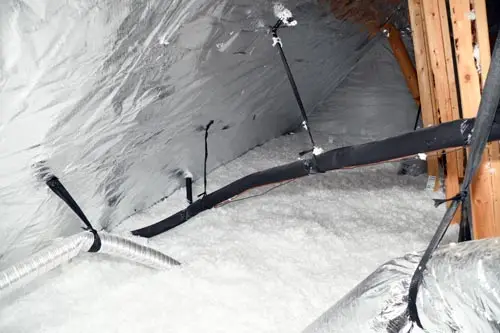
Once the attic-floor insulation is sorted, plenty of Austin homeowners also look at radiant barrier foil to cut radiant heat coming off the roof deck. The two are complementary rather than competing: fiberglass resists conductive heat flow through the ceiling, radiant barrier addresses radiant heat across an air space. Homes with ductwork in the attic tend to benefit most.
What a radiant barrier should never be used for is concealing a roof, moisture, ventilation or insulation problem. Those come first, every time. If you want the longer version of how it works and what the research measured, see does radiant barrier really work.
The inspection should end in a specific recommendation, not a sales pitch that was written before anyone opened the hatch.
No. Fiberglass has no expiration date. Condition, coverage, compression, moisture and contamination all matter far more than age. We have seen forty-year-old fiberglass in good shape and eight-year-old fiberglass that was never installed properly.
Sometimes, but the moisture source has to be corrected first — otherwise you are just waiting for it to happen again. Whether the material can stay depends on how wet it got, for how long, whether contamination came with it, and the condition of the framing and decking around it.
No. Bills move with weather, rates, HVAC performance, thermostat settings, air leakage, windows and how the house is used. Insulation is one line of investigation, not a verdict.
Open the attic hatch and shine a light across the floor. If you can see the tops of the ceiling joists, or the insulation is level with them, you are well below current standards — reaching R-38 with blown fiberglass generally takes twelve to sixteen inches of settled depth. Do not climb in if access is awkward or the material is wet or contaminated.
No. The attic evaluation and written estimate are free, and if what we find is that your attic is in decent shape, we will tell you that instead of selling you something.
Do not bury damp, contaminated or damaged insulation under a new layer. We inspect the accessible attic and tell you plainly whether the material can stay, needs more coverage, or should come out. The evaluation and written estimate are free. Serving Austin, Round Rock, Cedar Park, Georgetown, Leander, Pflugerville, Kyle, Buda, Hutto, Manor and Lakeway.